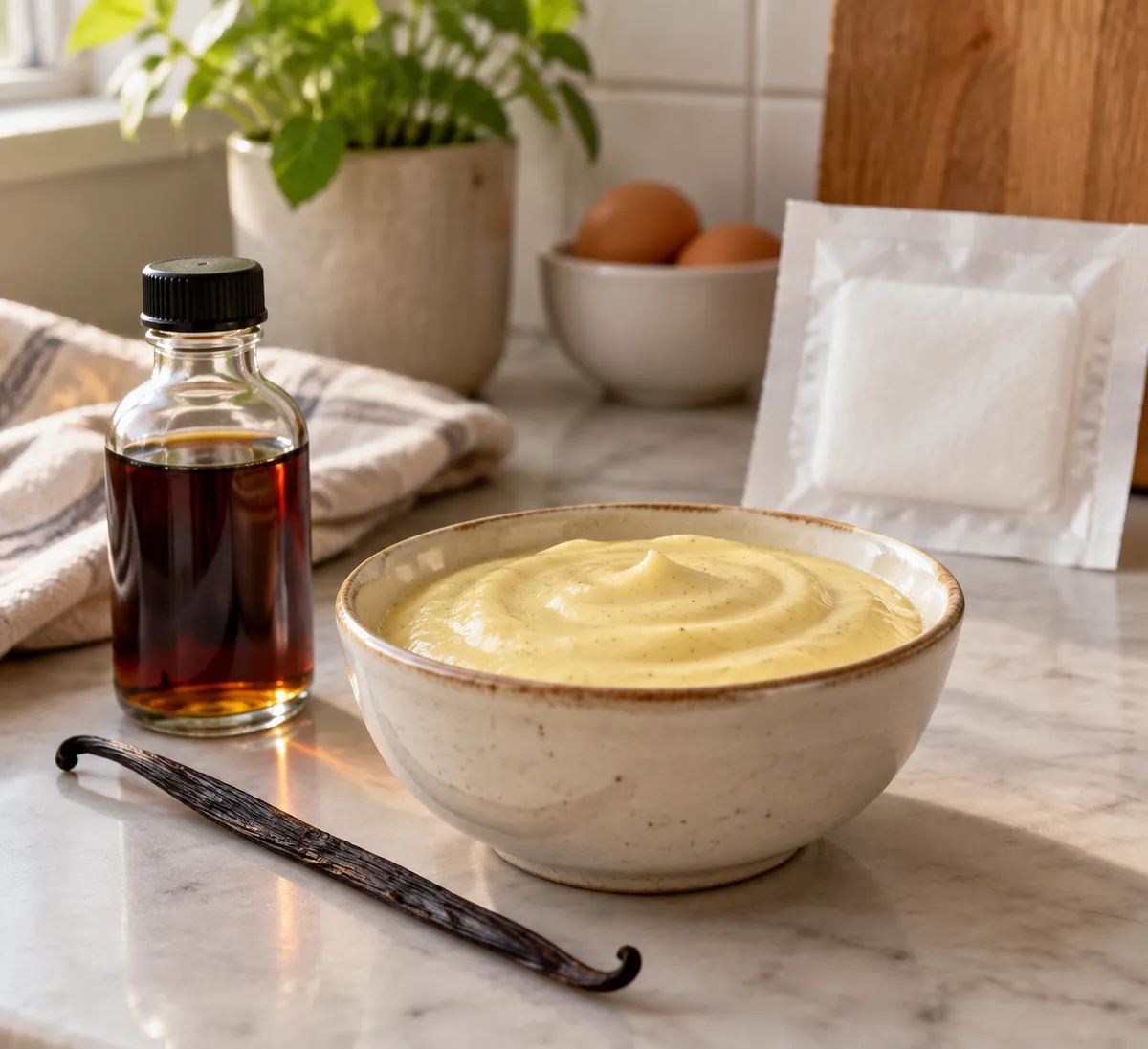
A scientific review has put the little bottle of vanilla in your pantry in the headlines. Per Women's Health, researchers suggest that vanillin, the compound behind vanilla's flavor and scent, may have potential in wound-healing materials. By the end of this piece, you'll know what that does and doesn't mean, how vanillin differs from the vanilla extract you bake with, and why the answer to "should I dab it on a cut?" is a firm no.
What the research actually suggests
The review points to vanillin's antioxidant, anti-inflammatory, and antibacterial properties as the reason it could be useful in wound-healing materials. Notice the wording: potential, and materials. This is about future products, such as dressings, that scientists could design around the compound.
Per the Women's Health report, it does not mean vanilla extract should be applied to cuts. Any wound-care product using vanillin would need to be medically designed and tested first.
The broader backdrop, as the report frames it, is that researchers are looking for affordable, accessible ways to improve wound care. That has them re-examining familiar food and scent compounds for medical uses.
Vanillin vs. vanilla extract: the difference that matters
This is where the headline can mislead, so here's the plain version.
- Vanillin is a single compound. It's the one responsible for vanilla's signature flavor and aroma.
- Vanilla extract is the pantry product you measure into batter. It's a finished food ingredient made for flavoring, not a medical formulation.
A compound studied for a specific purpose, in a designed and tested form, is a very different thing from the bottle next to your baking powder. Researchers building a dressing control what goes in it and how it behaves. A splash of extract gives you none of that control.
The source material doesn't detail what else is in a bottle of extract, so I won't speculate. The takeaway holds regardless: food products aren't tested or made for wounds.
So what should you do with a cut?
Keep doing what you already do. The report's message is that nothing about this research changes first aid. Leave the vanilla in the pantry and use your usual wound care. If a wound is serious, doesn't seem to be healing, or worries you, that's a question for a medical professional, not a spice rack.
Why a flavor molecule can become a medical tool
It's not as strange as it sounds. Plants make compounds for their own reasons, and some of them turn out to interact with the body in useful ways. Researchers look at familiar, inexpensive compounds precisely because they're easy to source. That's the appeal here: if vanillin works in a well-designed material, it could be an accessible option.
That's the honest stage we're at: an interesting idea worth more testing, not a treatment.
Put your vanilla to work where it's proven: the kitchen
Since the bottle is out anyway, here are a few easy ways to get more from it. These are standard kitchen uses, not health claims.
Stir it into oatmeal or yogurt
Add about 1/4 teaspoon of vanilla extract to a bowl of oatmeal or a cup of plain yogurt. It gives a sense of sweetness and warmth, so you may find you need less sugar or honey. Takes 10 seconds.
Boost pancake or French toast batter
For a standard batch serving four, whisk in 1 teaspoon of extract with the wet ingredients. For French toast, 1 teaspoon per 4 eggs and 1 cup of milk is a reliable starting point. Total prep is about 10 minutes.
Add it to fruit
Toss 2 cups of berries or sliced peaches with 1/2 teaspoon of extract and a teaspoon of sugar. Let them sit 10 minutes. The fruit releases juices and the vanilla rounds out the flavor.
Add it late to hot dishes
Heat can dull vanilla's aroma, so for custards, sauces, and warm drinks, stir it in at the end, off the heat, for the most noticeable scent and flavor.
Store it well
Keep the bottle tightly capped in a cool, dark cupboard, away from the stove. That helps it hold its flavor.
The takeaway
Enjoy the headline, then leave the bottle where it belongs: use vanilla extract for cooking, use real wound care for cuts, and let researchers do the testing on vanillin.