A UK government watchdog has said UK homes aren't prepared for possible food supply disruptions caused by events like cyberattacks, power outages, disease outbreaks or extreme weather, as reported by Medicalxpress. The advice on what to actually stock is often vague: "nonperishable food" doesn't tell you what to put in the cart.
Here's a practical way to fill that gap. By the end, you'll have a shopping framework for a balanced emergency pantry, a few no-fuss meal templates, and a short list of the overlooked items people forget. None of it requires panic buying. Most of it is food you'd eat anyway.
Think in Meals, Not Just Cans
The nutrition-focused guidance Medicalxpress covers argues that a good stockpile goes beyond random nonperishables. It should include balanced protein, whole-grain carbohydrates, canned vegetables, water, supplements and practical tools such as a can opener.
That gives you a simple structure. Build your pantry around five groups:
- Protein
- Whole-grain carbs
- Canned vegetables (and fruit)
- Water
- Extras: a multivitamin and a manual can opener
If each day's food touches those groups, you're covering the basics rather than living on biscuits and tinned soup.
Group 1: Protein That Keeps
Protein keeps you full and is easy to neglect when you're shopping only for shelf life. Good shelf-stable options include:
- Canned beans and chickpeas
- Canned lentils
- Canned fish such as tuna, sardines or salmon
- Nut butters
A sensible starting point is to pick three or four of these that you already like. Food you enjoy is food you'll rotate through and actually use, which keeps your stockpile fresh.
Group 2: Whole-Grain Carbs
Choose whole-grain carbohydrates over refined ones where you can. They bring fiber, which helps you stay full and keeps digestion steady when your diet gets narrower than usual.
Good candidates:
- Rolled oats
- Brown rice
- Whole-wheat pasta
- Whole-grain crackers or crispbreads
Tip: dry grains like rice, oats and pasta need water and heat to cook, so think about how you'd prepare them if the power were out. That's where the next item comes in.
Group 3: Canned Vegetables and Fruit
Canned vegetables are the easiest way to keep produce in an emergency pantry. Tomatoes, sweetcorn, carrots, peas, spinach and mixed vegetables all work.
Two habits make them better:
- Check the label for salt. Choose cans with no added salt, or drain and rinse them. Too much sodium is one of the easiest emergency-food mistakes to make.
- Don't skip fiber. Beans, lentils, whole grains and vegetables together keep fiber up, which a pile of white bread and processed snacks won't.
Group 4: Water
Water is the item people assume they'll sort out later. If supply is disrupted, you can't cook rice, rehydrate oats or simply drink without it. Store bottled water in a cool spot, and remember your cooking needs as well as your drinking needs. Count it as part of your shopping list, not an afterthought.
Group 5: The Overlooked Items
A manual can opener
A pantry full of cans is useless without a way in. Buy a simple manual can opener and keep it with the food, not buried in a kitchen drawer. Consider a spare.
A multivitamin
Supplements are part of the guidance Medicalxpress reports. A narrower diet can mean fewer fresh fruits and vegetables, and a basic multivitamin is a low-cost backup. If you take medication or have health conditions, check with a pharmacist or doctor about what suits you.
Three Meal Templates That Don't Feel Bleak
These are built from the groups above. They're templates rather than strict recipes, so use whatever you've stocked. Each takes roughly 10 to 20 minutes with a working hob; the first can be eaten cold if you can't cook.
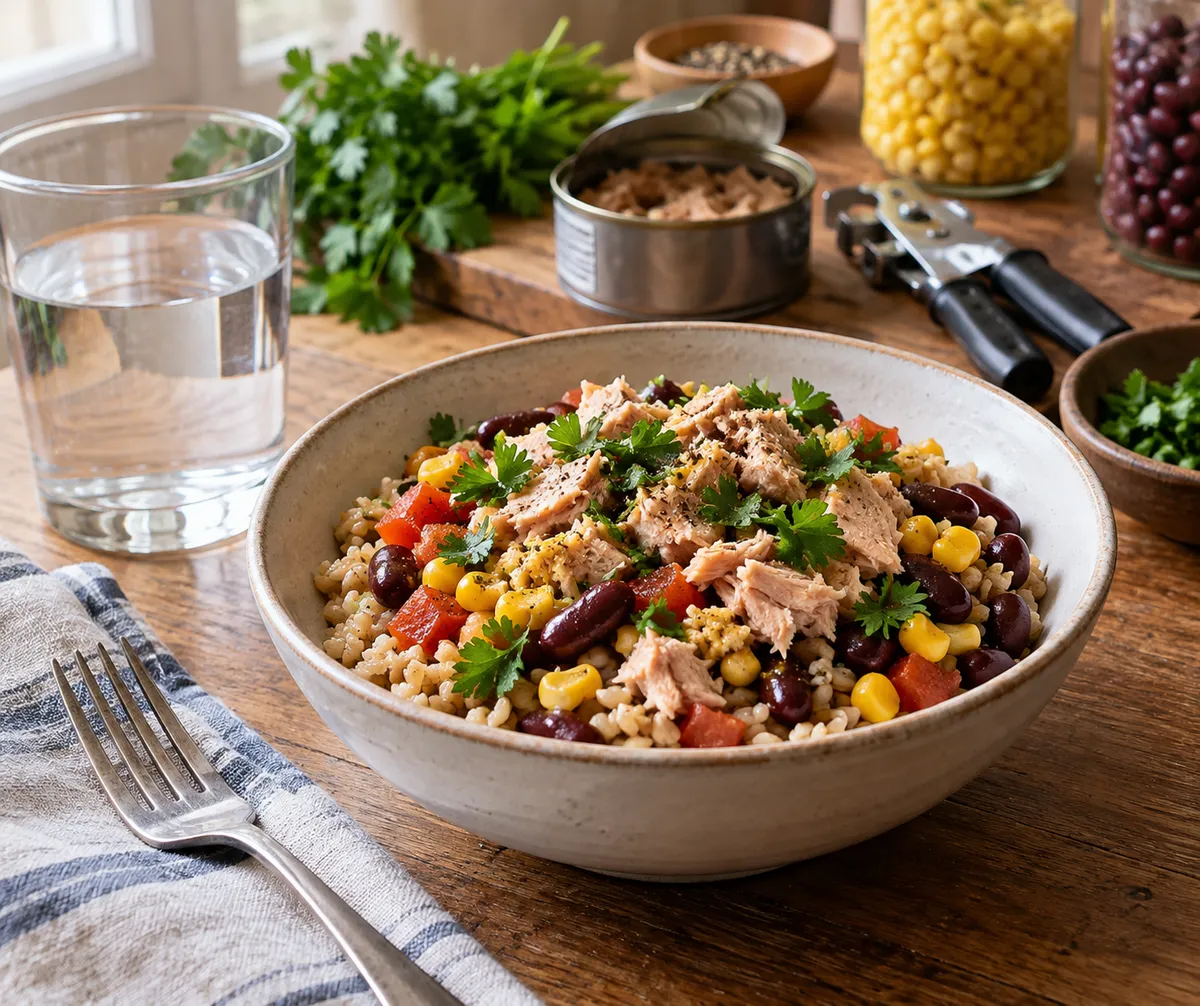
1. Bean and tuna grain bowl (about 10 minutes)
Heat or use pre-cooked brown rice. Top with one drained can of beans, one can of tuna and a handful of canned sweetcorn. Add a squeeze of lemon or a spoonful of vinegar if you have it. Pepper adds flavor without salt.
2. Tomato lentil pasta (about 15 to 20 minutes)
Boil whole-wheat pasta according to the packet. Meanwhile, warm one can of chopped tomatoes with one drained can of lentils and any dried herbs or spices you have. Toss together.
3. Oats with nut butter and fruit (about 5 to 10 minutes)
Cook rolled oats with water, stir in a spoonful of nut butter, and top with canned fruit. It covers whole grains and some protein in a single bowl.
Build It in Stages
You don't need to buy two weeks of food in one trip, which also helps your budget. Add three or four items each time you shop:
- Week one: a can opener, water, and two proteins
- Week two: whole grains and canned vegetables
- Week three: fruit, a multivitamin and extras you enjoy
Store everything in one cool, dry spot, and eat from it gradually, replacing what you use. That way nothing sits forgotten until it expires.
Start With One Shelf
Preparedness doesn't have to be fear-driven. Clear a single shelf this week, put a can opener on it, and add one protein, one grain and one canned vegetable you'd happily eat on an ordinary Tuesday. That's the foundation of a pantry that works whether or not anything goes wrong.