
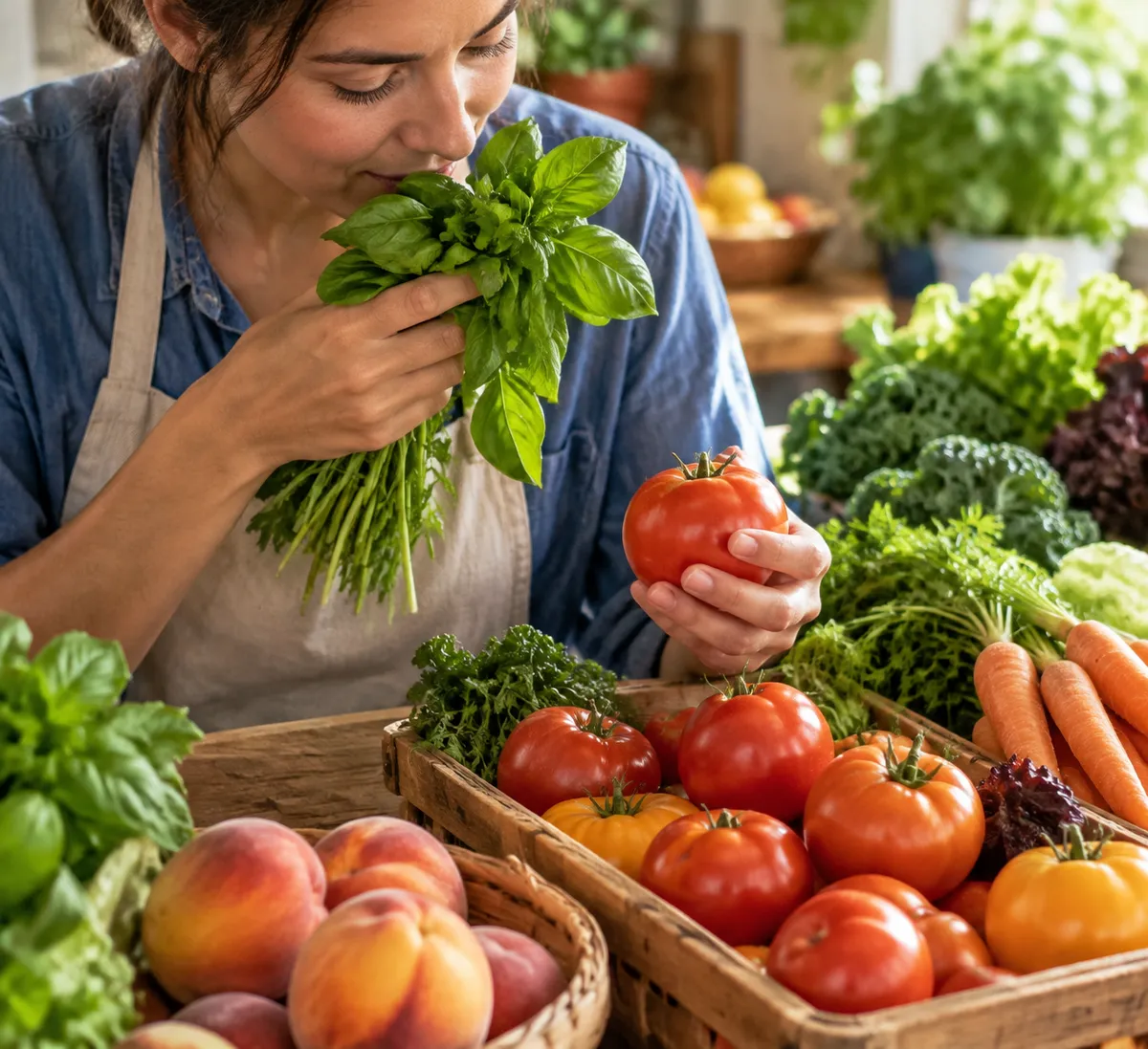
A great meal often gets decided before you turn on the stove. According to Fox News, Los Angeles-based cookbook author Carmen Perr, who wrote "Cook What Grows," argues that better home cooking starts at the market, with how you choose your fruits, vegetables and herbs. Her focus: pay attention to texture, color and aroma while you shop.
By the end of this guide, you'll have a simple three-sense routine you can run in about a minute per item, whether you're at a farmers market or a regular grocery store.
A note on scope: the reporting gives us Perr's overall approach (texture, color, aroma) rather than a fruit-by-fruit rulebook. So below, the framework is hers, and the practical examples are general shopping habits I'm offering as starting points. Treat them as things to test, not as her quotes.
Why shopping is the first cooking step
A recipe can't fix a bland tomato or a limp bunch of herbs. If the ingredient starts out good, you can cook it simply and it still tastes great. That's the logic behind Perr's approach, and it's especially handy when you're trying to cook affordably and seasonally: you spend your money on ingredients that deliver, and you waste less because what you bring home is actually worth using.
Start with aroma
Aroma is the most underused shopping tool. Bring the item up to your nose before you buy it.
- Herbs: Give a bunch a gentle squeeze or rub a leaf. Basil, mint, cilantro and similar herbs should smell vivid. If you have to hunt for the scent, move on.
- Fruit: Sniff near the stem end. A fragrant peach, melon or strawberry usually tastes like more than a pale one does.
- Vegetables: Most have a subtler smell, but a fresh, clean scent is a better sign than anything sour or musty.
This takes five seconds and costs nothing. If you only add one habit, make it this one.
Check texture with your hands
Texture tells you about freshness and how the item will behave when cooked.
- Firm where it should be firm. Carrots, cucumbers and zucchini shouldn't feel rubbery or soft.
- Gentle give where it should give. Ripe stone fruit and avocados yield slightly under light pressure. Press with your palm rather than your fingertips, which can bruise.
- Crisp leaves. Salad greens and herbs that look perky and hold their shape are a better bet than wilted or slimy ones.
Handle gently, and put back anything that feels off rather than leaving a dent in it for the next shopper.
Read color, but don't trust it alone
Color is the quickest signal, so it's where most people stop. Look for vibrant, even color that suits the item. Dull, faded or patchy produce is often past its best. But color works better paired with the other two senses: a beautiful tomato that has no smell and feels mealy won't taste like much. Use your eyes to narrow the pile, then confirm with your nose and hands.
A one-minute routine for the market
- Scan the display for the most vibrant items.
- Pick up two or three candidates and compare their weight and feel.
- Smell your top choice, especially herbs and fruit.
- Decide and move on. Don't overthink it.
At a farmers market, you can also ask the grower what's at its peak this week. Beginners often skip this, but vendors know their crops better than anyone.
Buy for the week, not the fantasy
A practical add-on to the sensory routine: buy what you'll realistically cook in the next few days. Pick fewer items, choose them well, and plan to use the most delicate ones first, like herbs and soft fruit, with sturdier vegetables later in the week. That fits the low-waste, seasonal mindset that's drawing more people to markets and fresh ingredients.
Let the best item set the menu
Next time you shop, go in with a loose plan rather than a fixed list. If the basil smells incredible, build dinner around it. If the tomatoes look dull, pick something else. Trust your nose, hands and eyes, and the cooking gets easier from there.