Ever noticed that the same recipe turns out differently on a calm Sunday than on a frazzled Tuesday? Country singer and author Jessie James Decker has a take on that. Below are five simple habits to help you cook better when your head isn't in the game.
The Lesson Behind "The Secret Sauce"
Per Fox News, Decker's new cookbook, "The Secret Sauce," is built around the idea that cooking is shaped by the emotions people bring into the kitchen. In the outlet's telling, food reflects care, mood, and connection, and her family-focused recipes grow out of that philosophy.
I don't have more of her specific quotes or recipes than that, so I won't invent any. But the idea holds up in practical terms, and you can test it in your own kitchen this week. What follows is my own advice, not hers.
1. Take a Two-Minute Reset Before You Start
Rushing is where most dinner mistakes begin: burned garlic, skipped steps, a pan that never got hot enough. Before you turn on a burner:
- Put your phone out of reach or on a timer-only setting.
- Wash your hands and clear a cutting-board-sized space.
- Take three slow breaths while you read the recipe start to finish.
That's about two minutes, and it catches the "oh, this needs to marinate" surprises before they hurt.
2. Do Your Prep While You're Still Calm
Stress spikes when things happen all at once. Chop everything first, then cook. For a typical weeknight stir-fry or pasta dish, that means 10 to 15 minutes of prep before heat goes on.
Set out small bowls for:
- Aromatics (minced garlic, ginger, sliced onions)
- Sauce ingredients, pre-measured (for example, 3 tablespoons soy sauce and 1 tablespoon honey)
- Vegetables grouped by cooking time
The cooking itself then takes 8 to 10 minutes and feels almost relaxed.
3. Cook the Tired-Night Version, Not the Ambitious One
If you're drained, don't attempt the three-pan recipe. Pick a meal that forgives distraction:
- Sheet-pan chicken and vegetables: 425°F, about 25 to 30 minutes, bone-in thighs until they reach 165°F inside.
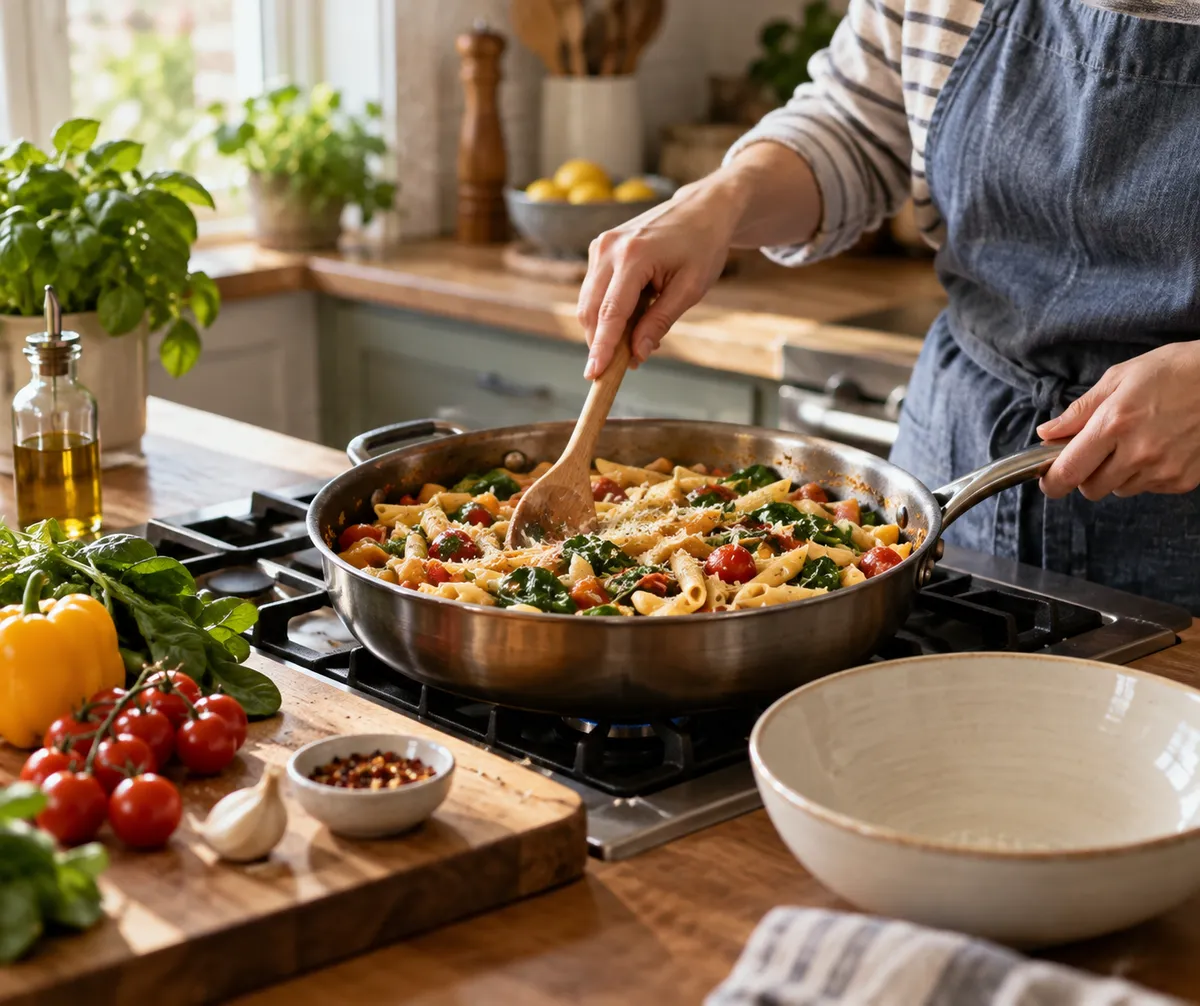
- One-pot pasta: 12 to 15 minutes once the water boils.
- Quesadillas with beans and cheese: 10 minutes, one skillet.
Matching the recipe to your energy is a form of care, for you and for whoever's eating.
4. Taste as You Go
Cooking with attention just means actually tasting. Check seasoning at three points: after the aromatics soften, when the sauce comes together, and right before serving. Often the fix is simple: a pinch of salt (start with 1/4 teaspoon), a squeeze of lemon, or a splash of vinegar.
If you're irritated or distracted, this is the step that gets skipped, and it's the one that most improves the plate.
5. Bring Someone Into the Kitchen
Since Decker's work centers on family dishes, here's the family angle: give someone a job. A kid can tear lettuce, rinse beans, or stir a dressing. A partner can set the table or watch the rice. Even a five-minute task turns dinner from a chore into a shared routine, and it makes the meal feel like something you made together.
Why This Resonates
Celebrity cookbooks often connect because they pair approachable food with a personal story. Decker, who works as a singer, author, and family lifestyle figure, is following that path with a message about mindset rather than technique. It's a useful reminder that skill isn't the only variable in a good dinner.
Try This Tonight
Pick one habit, the two-minute reset, and use it before your next meal. Notice whether the food, and your evening, goes differently.