Most of us think of la dolce vita as a vacation aesthetic: spritzes, linen, a sunny piazza. According to Vogue's profile of Vicky Bennison, creator of Pasta Grannies, the real version looks different. It's a kitchen, an older woman, a pile of flour, and a habit of using what's in front of her. Here's how to bring that mindset into your own cooking this week.
What Pasta Grannies Actually Is
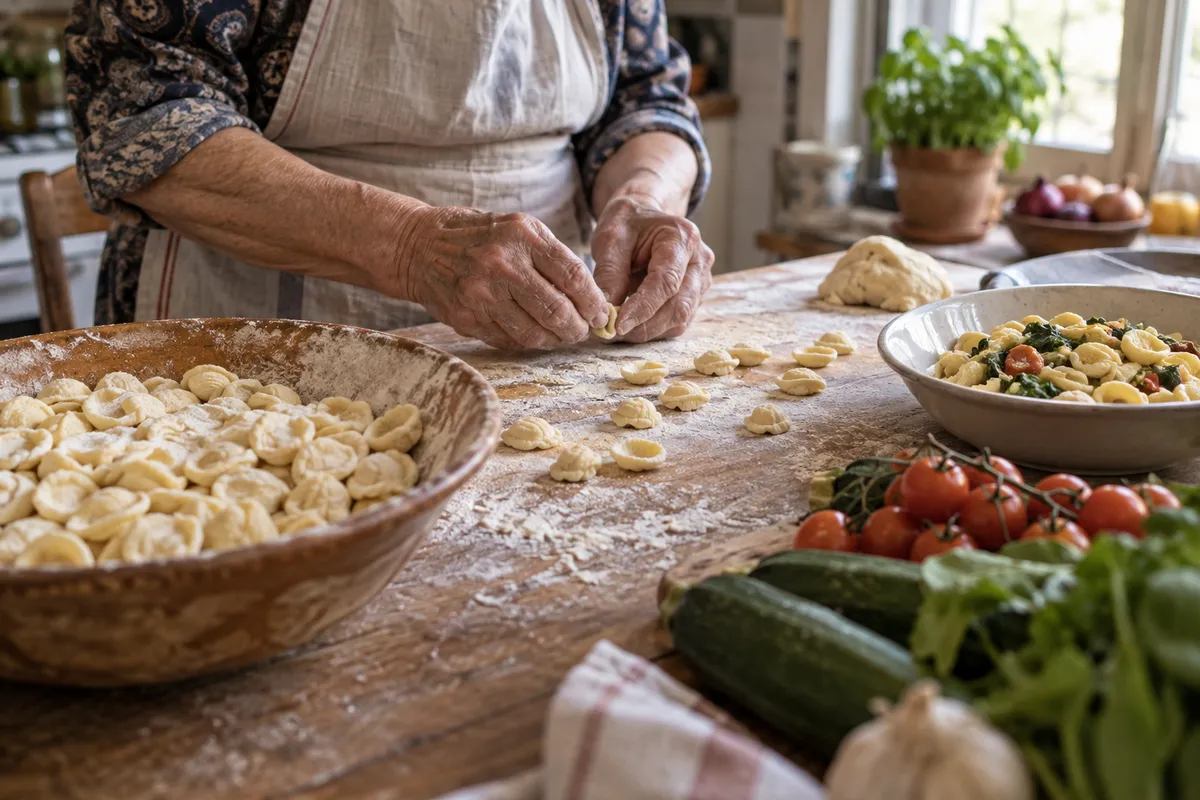
Per Vogue, Vicky Bennison is the author and creator of Pasta Grannies, a project that documents Italian nonne who keep handmade pasta traditions alive. The women also share life wisdom along the way. Bennison's new cookbook is called Eat Everything, and Vogue's piece includes a recipe from a grandmother named Rosa: cicatelli con ciambutella.
I can only vouch for what Vogue reported, so I won't invent details about the recipe's measurements or method here. What I can do is pull out the habits the project points to and show you how to use them.
Habit 1: Cook With What You Have
The title Eat Everything signals a no-waste way of cooking, and it's the most transferable lesson here. You don't need a special shopping trip. You need a different first question: not "what do I want to make?" but "what needs using up?"
Try this once this week:
- Open the fridge and pantry and pick three things that are close to done: a half bag of greens, a heel of cheese, a lonely onion.
- Pick a base: dried pasta, rice, or beans.
- Build a simple dish around those three items, seasoned with salt, olive oil, and garlic.
A pot of pasta takes about 10 minutes of boiling, so the whole thing can land on the table in 20 to 25 minutes. That's the everyday version of the eat-everything mindset.
Habit 2: Make Something by Hand
Handmade pasta is the heart of Pasta Grannies. Vogue's framing suggests these traditions are worth documenting because they live in people, not in books. You don't need to master a regional shape to get the benefit.
If you want to try, start with the simplest dough: flour and water. Mix, knead until smooth, rest it, and roll small pieces into shapes you can shape with your fingers. Expect your first batch to be uneven. That's fine. Hand-shaped pasta isn't supposed to look factory-made, and the irregular edges hold sauce well.
Budget about an hour the first time, including resting. It gets faster with repetition, which is exactly how the grandmothers in these stories learned.
Habit 3: Cook for (and With) Other People
The project also centers on community and intergenerational knowledge. The women aren't just cooking; they're passing something on. You can borrow that without a nonna in the family:
- Ask a relative or older neighbor for one dish they make from memory, then cook it together.
- Write down what they do, even when they say "until it feels right." Note what you see: how thick, how long, what the dough feels like.
- Invite someone to eat. A simple pasta shared at a table counts.
Recipes disappear when nobody records them. A phone video of a family member's hands working dough is worth more than a polished photo.
Habit 4: Treat Simple Pleasure as the Point
Vogue positions Pasta Grannies as a counterweight to hyper-optimized wellness trends, and I think that's the most useful reframe in the piece. Dolce vita, in practice, isn't a protocol. It's a plate of food made with care, eaten slowly, with company. Bennison's project ties that to the way these women live and age, though I'd treat any longevity claims as the grandmothers' lived wisdom rather than medical advice.
A workable translation for a regular weeknight:
- Cook one meal from scratch, even a basic one.
- Eat at a table, not at your desk.
- Take a walk afterward if you can.
None of that requires a special ingredient or a spare Saturday.
Where to Find Rosa's Recipe
If you want the cicatelli con ciambutella itself, Vogue's feature includes Rosa's recipe, and Eat Everything is Bennison's new cookbook for more in the same spirit. Follow the original measurements and timing there rather than a paraphrase from me.
Your Next Step
This week, pick one thing in your kitchen that's about to go to waste and make dinner around it. Then ask someone older than you for one recipe they know by heart, and write it down before it's gone.