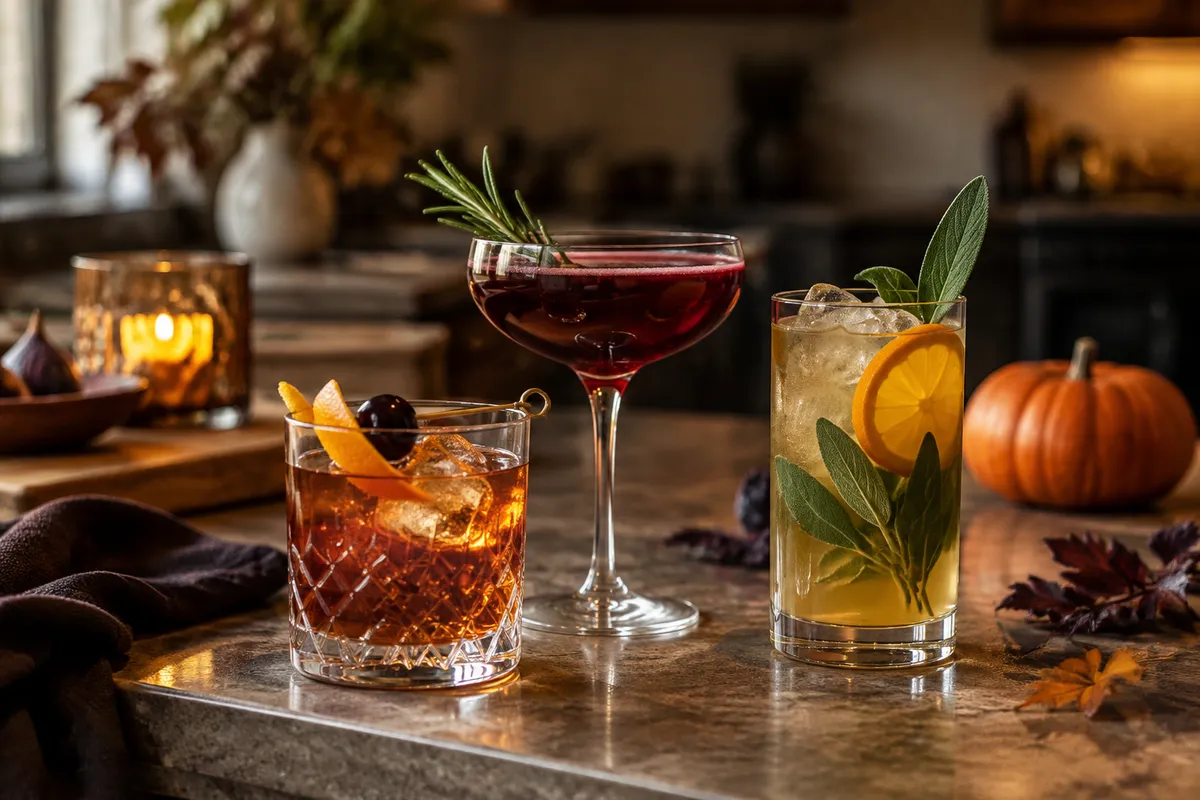
A good cocktail with a story behind it is more fun to serve than one without. This Halloween, three drinks come with histories strange enough to carry a whole evening: the Monkey Gland, Arsenic and Old Lace, and the Broken Shoeshiner. This guide covers the story behind each one and how to turn them into a themed drink night that works for guests.
The stories come from a WineOceans video in which the host mixes each drink while narrating its history. This article doesn't replace it. Think of it as a hosting companion, and I haven't reproduced the recipes here (see the note on that below).
The Monkey Gland: a surgeon's failed experiment
The name sounds like a dare, and it comes from a real episode of medical history. Per the video, the drink was inspired by Dr. Voronoff, a surgeon whose gland transplant experiments in the 1920s aimed at rejuvenation and were controversial. The experiments failed.
Hosting tip: Lead with this one. It's the most surprising name, so it gets guests curious and asking questions right away. Keep the story short: a 1920s surgeon, a rejuvenation idea, a drink named after the whole affair.
Arsenic and Old Lace: from a real crime to a famous play
Most people know the title from the play. According to the video, that play was based on a real serial killer, Amy Archer Gilligan, who poisoned approximately 60 residents. The cocktail takes its name from the play.
Hosting tip: This is the darkest of the three, so tell it plainly and respectfully. The victims were real people, so skip the jokes at their expense and let the history do the work. A line about how the play's title carries a true story is enough.
The Broken Shoeshiner: a drink born of a panic
This one has the most interesting lesson. The video says the Broken Shoeshiner was created in response to the 1905 Swiss murders, in which Jean Lanfrey killed his family. The event sparked an anti-absinthe movement.
The video's takeaway is that absinthe was scapegoated. It was one of many alcoholic factors in the crime, yet it took the blame. That is a useful point to make at the table: when a society panics about one substance, the cause of a tragedy can get distorted.
Hosting tip: Save this for last. It gives the evening a thoughtful ending after two more sensational stories, and it's a good conversation starter.
How to run a themed drink night
The video's own structure is a good template. Each drink gets three beats: the story, the making, and the tasting. That variety keeps people engaged. Here is how to adapt it for a living room:
- Prep your tools first. Set out glasses, ice, a shaker and a jigger before guests arrive, so you can talk while you mix rather than hunting for equipment.
- Tell the story while you build the drink. Keep each backstory to a minute or two, about as long as it takes to mix a single cocktail.
- Serve in order. Monkey Gland, then Arsenic and Old Lace, then Broken Shoeshiner, moving from odd to dark to reflective.
- Offer a non-alcoholic option. Sparkling water with citrus works for anyone skipping a round.
Plan on roughly 10 to 15 minutes per drink including the story, so three rounds fit comfortably in an evening.
A note on recipes
The video shows the host preparing each drink, and the specific measurements are in the video rather than in my notes. Rather than guess at ratios, watch the preparation steps there, or check a trusted bartending reference for each cocktail's standard spec and test the drink once before your party. A trial run also tells you whether you need more of any ingredient.
The takeaway
Pick one of these three drinks, learn its two-minute story, and make it for your next gathering. A name people remember is half the fun of a cocktail.