You don't have to pick one famous diet to eat in a way that supports healthy aging. According to a Women's Health roundup of new research, 10 different dietary patterns have been linked with slower biological aging. The core takeaway, per the experts quoted there: no single "perfect" longevity diet wins. Consistent diet quality matters most.
That's good news for anyone cooking on a Tuesday night. Below is what those patterns have in common, and how to turn it into a plate you can actually make.
The 10 patterns, and what they have in common
The research looked at these approaches:
- Mediterranean diet
- Nordic diet
- DASH diet
- MIND diet
- Alternate Healthy Eating Index (AHEI)
- Plant-based Diet Index
- Healthful Plant-based Diet Index
- Unhealthful Plant-based Diet Index
- Dietary Inflammatory Index
- EAT-Lancet / Planetary Health diet
The summary I'm working from doesn't spell out how each one performed or give numbers, so I won't rank them. What it does say is that the patterns tied to slower aging center on plant foods, whole grains, and minimally processed ingredients.
Notice the name "Unhealthful Plant-based Diet Index" in that list. It's a reminder that "plant-based" alone isn't the point. Quality of the plant foods is. I'd read that as a reasonable cue to favor whole, minimally processed ones, though that's my interpretation rather than a finding from the report.
Build the plate: a simple framework
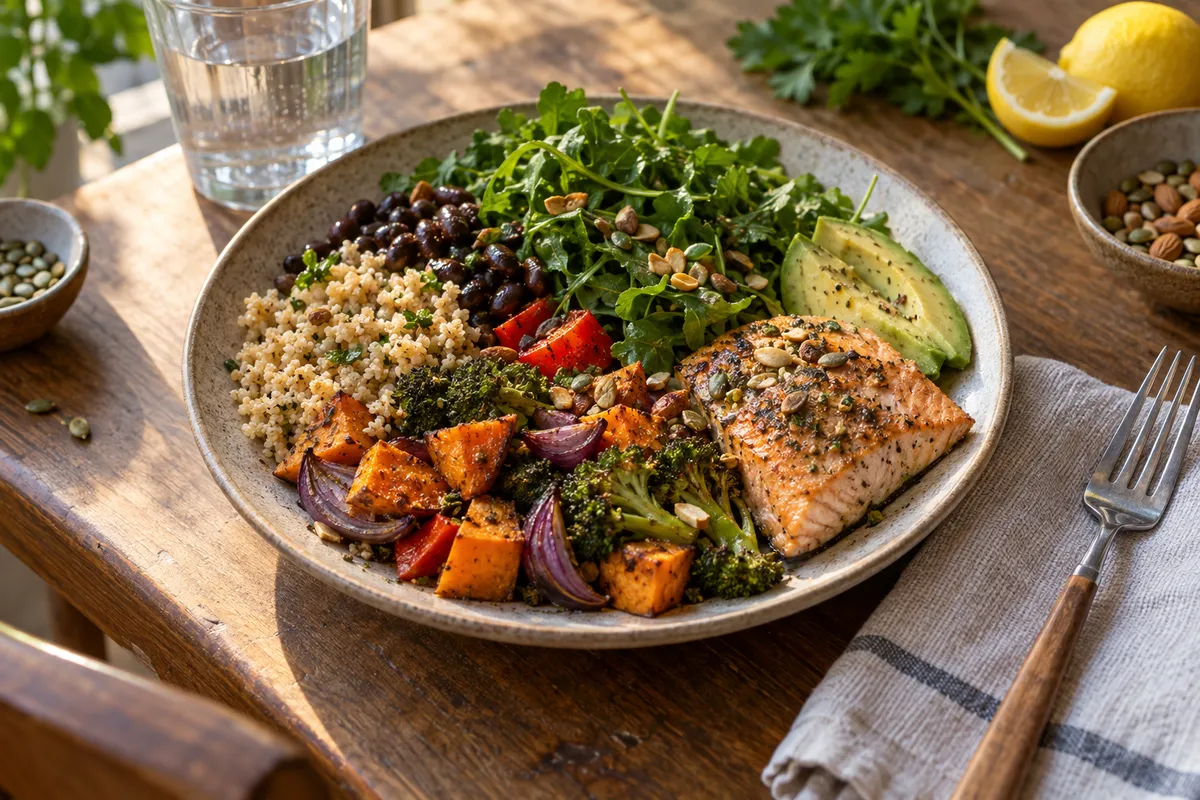
Since the shared themes are plants, whole grains, and minimal processing, here's a weeknight template that fits all of them. These are my cooking suggestions, not prescriptions from the research.
- Half the plate: vegetables. Roasted, sautéed, or raw.
- A quarter: whole grains. Brown rice, farro, barley, whole-wheat pasta, or oats.
- A quarter: protein. Beans, lentils, fish, eggs, or chicken.
- A drizzle of fat and a flavor hit. Olive oil, nuts, lemon, herbs, garlic.
Three dinners that follow the framework
Sheet-pan vegetables and chickpeas (about 35 minutes)
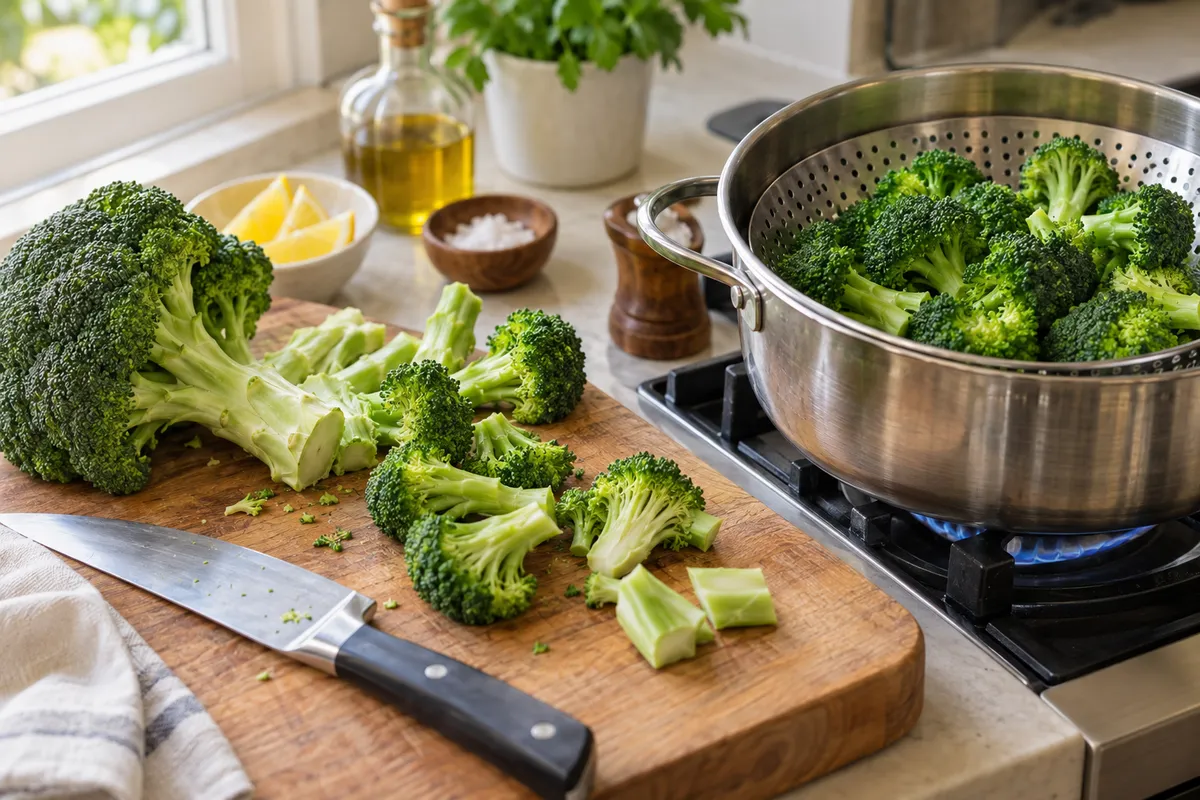
Heat the oven to 425°F. Toss 2 cups of broccoli florets and 1 sliced red onion with 1 drained, rinsed 15-ounce can of chickpeas, 2 tablespoons olive oil, ½ teaspoon salt, and ½ teaspoon cumin. Spread on a rimmed baking sheet in a single layer and roast 22 to 25 minutes, stirring once, until the edges brown. Serve over 1 cup cooked brown rice or farro with a squeeze of lemon. Serves 2.
Lentil soup from the pantry (about 40 minutes)
Soften 1 diced onion, 2 diced carrots, and 2 diced celery stalks in 1 tablespoon olive oil over medium heat for 8 minutes. Add 2 minced garlic cloves, 1 cup rinsed brown or green lentils, and 4 cups low-sodium broth. Simmer partially covered for 25 to 30 minutes until the lentils are tender. Finish with a splash of vinegar and black pepper. Serves 3 to 4.
Quick fish and grain bowl (about 25 minutes)
Pat 2 fish fillets dry (salmon or cod both work), season with salt and pepper, and pan-sear in 1 teaspoon olive oil, 3 to 4 minutes per side depending on thickness, until the fish flakes easily. Serve over cooked whole grains with a big handful of greens and sliced cucumber, dressed with olive oil and lemon.
A grocery list built on the overlap
This list reflects the shared emphasis on plants, whole grains, and less-processed foods:
- Vegetables: onions, carrots, broccoli, leafy greens, frozen spinach or peas (frozen counts)
- Fruit: berries, apples, citrus
- Whole grains: oats, brown rice, farro, whole-wheat pasta
- Legumes: canned or dried chickpeas, lentils, black beans
- Proteins and fats: fish, eggs, nuts, olive oil
- Flavor: garlic, lemons, vinegar, dried herbs and spices
Canned beans and frozen vegetables keep costs and prep time down, which matters because a pattern you can't keep up won't do much for you.
Why consistency beats the "miracle food"
The takeaway the experts emphasize is that overall, steady diet quality matters most, not a single superfood or a rigid plan. That's also why you can skip expensive supplements and extreme restriction as a starting point. Nothing in the findings described here calls for them.
Practically, that means aiming for a decent pattern most days rather than a perfect one for two weeks. If lunch was a drive-thru, make dinner the lentil soup. Tomorrow is another chance.
A note on "biological age"
Biological age refers to how your body is aging at the cellular level, as opposed to the number of birthdays you've had. The research connects these diet patterns with slower biological aging. That's an association; it doesn't mean any single meal turns back the clock. If you have a medical condition or take medications, check with your doctor or a registered dietitian before making big changes.
Start here
This week, swap one processed dinner for a plate that's half vegetables, a quarter whole grain, and a quarter protein, then repeat it until it feels automatic.